
Parkinson's Disease Physiotherapy at Home: A Practical Guide to Staying Active, Safe and Independent
- Ben Proctor
- 7 hours ago
- 7 min read
Receiving a diagnosis of Parkinson's disease can feel overwhelming. However, it is important to remember that treatment and management of Parkinson's has improved significantly over recent decades. Many people continue to lead active, fulfilling and independent lives for many years following diagnosis.
Modern Parkinson's medications can be highly effective at managing symptoms, particularly when the right medication, dose and timing have been established. Alongside medication, physiotherapy, regular exercise and an active lifestyle are increasingly recognised as some of the most important tools available to help people maintain their mobility, confidence, balance and independence.
Whilst Parkinson's affects everyone differently, there is a growing understanding that movement really is medicine. The combination of appropriate medication, staying physically active, maintaining strength and flexibility, and addressing challenges early can have a significant impact on quality of life. Many people continue to enjoy walking, swimming, gardening, holidays, hobbies, family life and social activities long after their diagnosis.
As a physiotherapist providing home visits across Cornwall, I often find that some of the most effective interventions are not necessarily complicated. Small changes to the home environment, the right equipment, appropriate exercise and good routines can often make a significant difference to day-to-day life.
Why Physiotherapy at Home Can Help
One of the greatest advantages of physiotherapy at home is that we can assess the challenges people face within their own environment. Getting out of bed, standing from the toilet, walking through a doorway, making a cup of tea or getting safely into the garden are all things that are difficult to assess fully within a clinic setting.
By seeing someone in their own home, we can identify practical solutions that support independence and confidence. Often, small changes to the home environment can make a significant difference.
Creating a Parkinson's-Friendly Home Environment
Many people with Parkinson's notice that walking becomes more difficult in confined spaces. Doorways, narrow hallways, cluttered rooms and tight turns can increase shuffling, hesitation and freezing episodes.
Where possible:
Keep walkways clear and uncluttered.
Remove loose rugs and trailing wires.
Ensure rooms are well lit.
Avoid unnecessary furniture in walking routes.
Create open spaces where turning and walking are easier.
Many people find they walk significantly better in open spaces compared to cramped environments.
When creating seating areas, try to avoid chairs tucked away in tight corners. Open access around seating can make standing, turning and walking much easier.
Doorways and Narrow Spaces
Doorways are a common trigger for shuffling and freezing episodes. Many people notice they walk well down a hallway but hesitate when approaching a doorway.
If possible, create clear visual approaches to doorways and reduce clutter around entrances. Sometimes simply widening the visual space around a doorway can make movement easier.
Equipment That Can Make Daily Life Easier
The right equipment can improve safety, confidence and independence.
Bed Levers
Bed levers can assist with getting in and out of bed, turning and providing confidence when standing.
Satin Sheets
Turning in bed can become increasingly difficult due to stiffness and reduced trunk rotation. Satin sheets reduce friction and can make movement easier.
Specialist satin bedding is available with non-slip side panels which help prevent sliding from the edge of the bed whilst still allowing easier movement.
Toilet Frames and Raised Toilet Seats
Standing from a low toilet can become challenging. Toilet frames, raised toilet seats and Mowbray toilet surrounds can provide valuable support and improve confidence.
Perching Stools
Fatigue is common in Parkinson's disease. A perching stool can allow someone to prepare meals, wash dishes or complete kitchen tasks without prolonged standing.
Choosing the Right Walking Aid
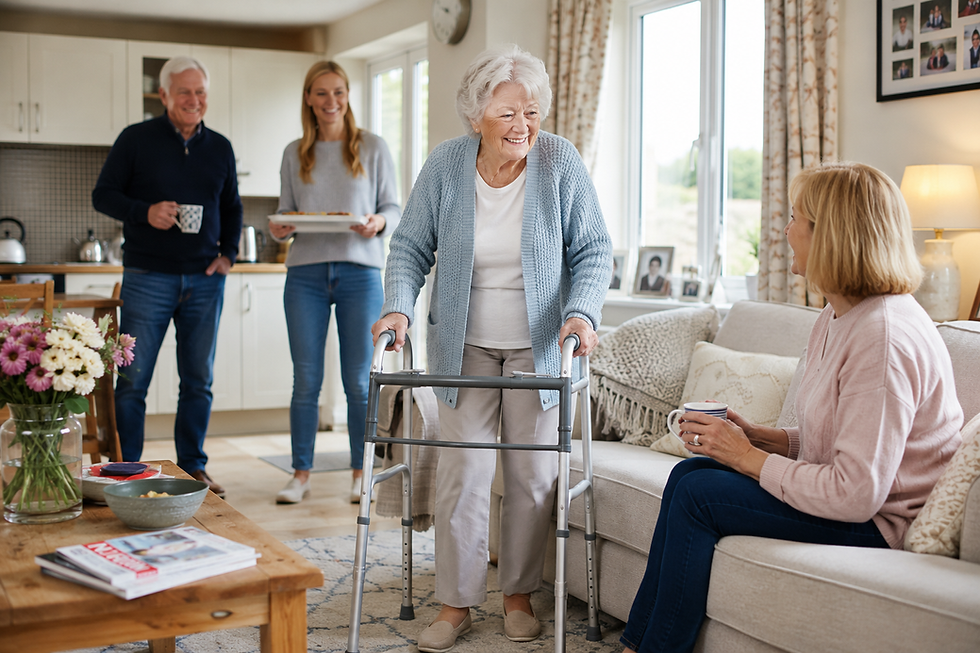
Walking aids are not one-size-fits-all. Whilst sticks and Zimmer frames can be helpful, they can sometimes interrupt the natural rhythm and flow of walking. For some individuals, a four-wheeled walker allows smoother movement and better walking quality.
However, the best walking aid depends on the individual, their balance, symptoms and home environment. We would recommend getting an assessment of your walking to determine if a walking aid is needed and what would suit your needs best.
One thing I often remind people is that a walking aid is only effective if it is used.
I once worked with a gentleman who continued to experience falls despite having an appropriate walking aid. After discussing the circumstances in more detail, we discovered that every fall occurred when he had left the walking aid in another room and attempted to walk without it.
Sometimes the challenge is not the equipment itself but remembering to use it consistently.
Exercise: Why Movement Really Is Medicine
Exercise is increasingly recognised as one of the most important interventions for Parkinson's disease.
Regular activity can help maintain:
Mobility
Balance
Strength
Cardiovascular fitness
Confidence
Independence
Mental wellbeing
The best exercise is often the one you enjoy and can maintain consistently.
Walking, Swimming and Exercise Bikes
Walking remains one of the most effective forms of exercise available.
Swimming can provide excellent cardiovascular exercise whilst reducing stress on joints.
Exercise bikes are particularly useful because they provide a safe and reliable way to remain active regardless of weather conditions or confidence levels outdoors.
Many people also enjoy dancing, gardening, exercise classes and physiotherapy-led rehabilitation programmes.
The goal is to remain active regularly rather than occasionally.
Flexibility Exercises
Parkinson's often causes increased stiffness and reduced movement.
Simple flexibility exercises may help maintain mobility.
Examples include:
Knee rolls to improve trunk rotation.
Knee hugs to maintain lower back and hip flexibility.
Full body stretches with arms overhead and legs extended.
Gentle spinal rotation exercises.
These exercises can often be completed on the bed and incorporated into a daily routine.
Maintaining Good Posture
A flexed posture is common in Parkinson's disease. Many people gradually develop:
Rounded shoulders.
Reduced arm swing.
Looking towards the floor.
Difficulty standing fully upright.
A slight bend in their knee
Standing tall against a wall or kitchen worktop and gently drawing the shoulders back can help encourage a more upright posture.
Think:
"Stand tall."
Strength and Knee Extension
Some people develop a slight bend in their knees when standing and walking.
Exercises such as static quadriceps contractions and heel hangs can help maintain knee extension and encourage a more upright standing posture. Strengthening the legs, hips and core can improve confidence and help support mobility.
Improving Walking Quality
Walking can become:
More shuffling.
More flat-footed.
Slower.
Less fluid.
Simple cues can help.
Try thinking:
"Big steps."
"Heel then toe."
"Stand tall."
"Swing your arms."
Many people find their walking improves when they consciously focus on movement quality.
Visual and Verbal Cueing
Visual and verbal cueing can be highly effective.
Examples include:
Counting whilst walking.
Using floor markings.
Following a visual line.
Walking to a rhythm.
Using verbal prompts from family members.
These techniques can help overcome freezing and improve walking quality.
Footwear Matters
Good footwear is important.
Choose shoes that are:
Supportive.
Flat and stable.
Well fitting.
Securely fastened.
Backless slippers should generally be avoided. Whilst easy to put on, they can increase the risk of slips, trips and falls because they provide limited support and may move on the foot during walking.
Medication Timing and Symptom Control
Medication remains a key part of Parkinson's management. Many people experience "on" and "off" periods during the day where symptoms fluctuate depending on medication timing.
Consider using:
Phone alarms.
Smart watches.
Medication organisers.
Reminder systems.
Taking medication consistently can have a significant impact on mobility and symptom control.
Bowel Health and Constipation
Constipation is common in Parkinson's disease and can affect medication absorption, as much of the medicaiton is absorbed in the intestines. A period of constipation might reduce the medication being absorbed in the body, and therefore result in worsening parkinson's symptoms, despite taking the medication regularly.
Good bowel management includes:
Staying active.
Drinking enough fluids.
Eating a balanced diet.
Seeking advice if constipation develops.
Bowel health is often overlooked but can have a significant impact on symptom management.
Continence and Night-Time Safety
Rushing to the toilet is a common cause of falls.
Helpful strategies may include:
Good lighting.
Clear routes to the bathroom.
Grab rails.
Bedside urinals.
Continence products where appropriate.
The aim is to make night-time mobility as safe as possible.
Falls Prevention Around the Home
Falls prevention should be a priority.
Simple measures include:
Removing trip hazards.
Improving lighting.
Using appropriate walking aids.
Installing grab rails.
Wearing suitable footwear.
Maintaining strength and balance.
A physiotherapy assessment can identify individual risk factors and provide personalised advice.
Making the Kitchen Easier to Use
Small adaptations can make daily life much easier.
Consider:
Storing frequently used items at waist height.
Keeping cups, plates, tea and coffee within easy reach.
Using a one-cup kettle.
Using a kitchen trolley to transport items safely.
The aim is to reduce unnecessary effort and conserve energy.
Staying Active in the Garden
Gardening is an excellent way to remain active.
Adaptations may include:
Raised beds.
Large planters.
Handrails.
Stable pathways.
Lightweight tools.
The goal is often to adapt activities rather than stop doing them.
Accepting Help and Conserving Energy
Remaining independent does not mean doing everything yourself.
Many people benefit from support with:
Gardening.
Housework.
Shopping.
Heavy lifting.
Accepting help with physically demanding tasks can allow energy to be directed towards exercise, hobbies, social activities and family life.
Staying Connected
Parkinson's affects more than physical health. Confidence, mood and social participation can all be affected. Keep seeing family and friends. Keep pursuing hobbies. Keep going out. Keep doing the things you enjoy.
Local support groups, Parkinson's cafés and community activities can be enormously beneficial.
Local Parkinson's Support in Cornwall
Cornwall has an excellent Parkinson's community and there is support available for both individuals and families.
Parkinson's Cornwall provides support, activities, information and opportunities to connect with others living with Parkinson's across the county. Parkinson's Cornwall: https://parkinsonscornwall.com/
Local Parkinson's Cornwall Support:https://localsupport.parkinsons.org.uk/provider/parkinsons-cornwall
Further Resources
Parkinson's UK:https://www.parkinsons.org.uk/
NHS Parkinson's Disease Information:https://www.nhs.uk/conditions/parkinsons-disease/
Final Thoughts
Living with Parkinson's disease can bring challenges, but there is also a great deal that can be done to maintain independence, confidence and quality of life.
The combination of modern medication, physiotherapy, regular exercise, home adaptations, appropriate equipment and good support can make a remarkable difference. Many people continue to live active, rewarding and meaningful lives for many years following diagnosis.
At Physio at Home, we provide physiotherapy and rehabilitation throughout Cornwall within the comfort of your own home. By assessing people within their everyday environment, we can provide personalised advice, rehabilitation and practical solutions that support independence, confidence and mobility for as long as possible. Please visit https://www.physioathome.uk/ for more information


Comments